
How to Prevent Heartworm and Other Parasite-Borne Diseases?
Parasite-borne diseases are a serious health threat for both dogs and cats, and many of them spread faster than pet owners realize. Heartworm disease, fleas, ticks, and internal parasites can impact your pet’s energy, appetite, skin health, and even long-term organ function. The good news is that with the right heartworm prevention plan and regular care, most parasite-related illnesses can be avoided.
Since many parasites are linked to outdoor exposure, prevention must be proactive, not reactive. From mosquito exposure to flea infestations inside the home, parasites can show up in any season and in any environment. Therefore, building a year-round routine for pet parasite control is one of the smartest things you can do for your pet’s overall wellness.
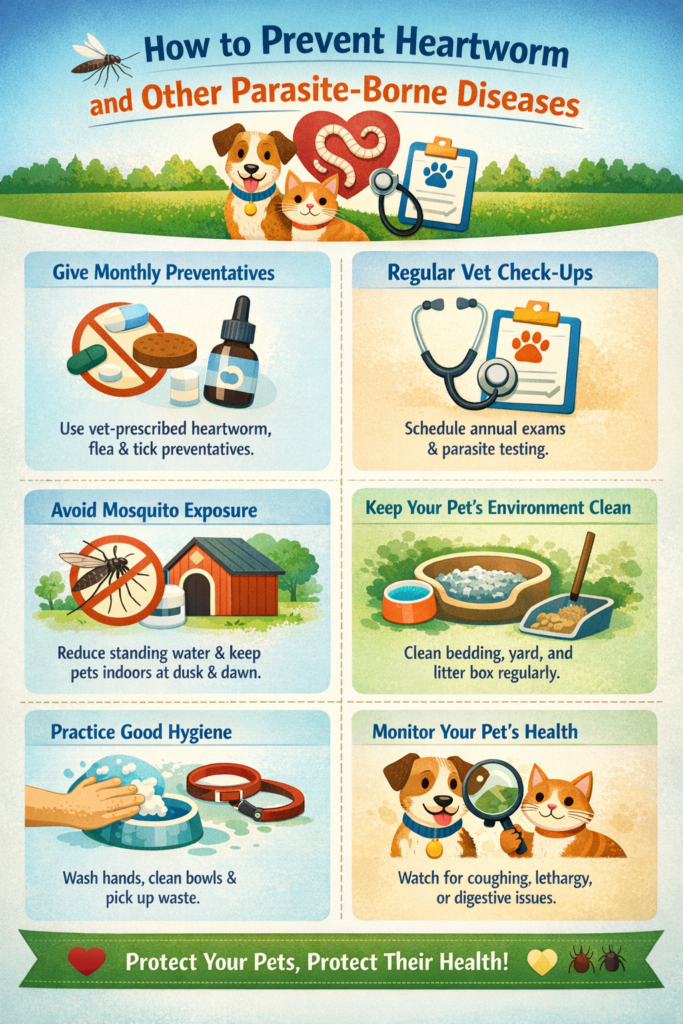
Understanding Heartworm Transmission and Parasite-Borne Diseases
Heartworms are most commonly spread through heartworm transmission when an infected mosquito bites your pet. Heartworm is considered one of the most dangerous mosquito-borne diseases in pets, especially in warm or humid regions where mosquitoes thrive. Once heartworm larvae enter the body, they grow and eventually affect the heart and lungs, causing serious complications if left untreated.
In addition to heartworms, other parasite-borne diseases may come from fleas, ticks, and contaminated environments. Fleas and ticks don’t only cause itching. They can also carry infections and spread disease through bites. Understanding how quickly parasites multiply helps pet owners take early steps to protect their furry family members.
Why Heartworm Prevention Should Start Early
The best way to protect your pet is by starting heartworm disease prevention early and staying consistent. Puppies and kittens can be vulnerable because their immune systems are still developing, and parasite exposure can happen anytime your pet steps outdoors. Prevention is especially important during peak mosquito months, but it should not be limited to only summer.
Many pet owners in coastal and warm areas benefit from developing a long-term wellness strategy that includes a pharmacy-supported prevention routine. For example, if you’re seeking reliable pet health support and long-lasting preventives, working with a trusted provider such as Hilldrugs Pharmacy for pet parasite prevention and heartworm control solutions can make it easier to stay consistent with monthly care.
Monthly Parasite Preventives and Safe Treatment Options
One of the most effective ways to control parasites is through monthly parasite preventives recommended by your vet. These preventive medications are often designed to stop parasites before they can develop and spread inside the body. Staying on a routine reduces the risk of severe illness and also helps avoid expensive emergency treatments later.
Using safe parasite prevention treatments is just as important as using them regularly. Always follow safe dosing guidelines based on your pet’s weight, age, and breed. Never share medication between pets, and avoid using over-the-counter products without veterinary advice. Some can be toxic if used incorrectly.
Flea and Tick Prevention
Strong flea and tick prevention is essential because fleas and ticks are common flea and tick carriers of harmful diseases. They can also spread quickly in carpets, bedding, and outdoor spaces. Even indoor pets may be exposed if fleas hitch a ride on shoes, clothing, or other animals.
If you want complete internal and external parasite control, your prevention routine should include solutions for both external parasites like fleas and ticks, and internal parasites, like intestinal worms. Many modern prevention products cover multiple parasite risks at once, making it easier to maintain protection.
The Role of Veterinary Wellness Exams and Blood Testing
Regular vet visits are a key part of veterinary parasite prevention and long-term health. Your pet may look healthy on the outside while parasites develop internally. Therefore, veterinary wellness exams are important for catching issues early. These exams also help your vet recommend the best prevention product based on your pet’s lifestyle.
In addition, blood testing for heartworms is critical even when your pet is on medication, because no prevention plan is perfect. Discussing Veterinary Medicine for long-term parasite prevention and heartworm protection with your vet ensures your pet stays covered through every season.
Building a Year-Round Parasite Prevention Plan at Home
A strong year-round prevention plan includes more than just medication. It also involves smart home practices. Parasites thrive in warm, shaded, and damp environments. Keeping your lawn trimmed, cleaning pet bedding regularly, and reducing standing water can greatly support environmental parasite control and limit mosquito breeding areas.
Supporting your pet’s long-term wellness matters too. Strong pet immune health can help your pet fight off infections more effectively. Combined with routine prevention, good nutrition, clean surroundings, and early testing can provide early detection and treatment before parasites lead to major health problems.
Watch for Heartworm Symptoms and Protect Your Pet’s Health
Knowing heartworm symptoms and prevention tips can save your pet’s life. HillDrugs Pharmacy will provide expert guidance and reliable heartworm and parasite-prevention medications. Some early signs include coughing, low energy, weight loss, and reduced appetite.
However, heartworm may not show symptoms until it becomes severe, which is why prevention and testing are far more reliable than waiting for warning signs. Contact us today by calling (949) 640-6564 to ensure your pet stays healthy.
FAQS
What is heartworm disease, and how is it transmitted?
Heartworm disease is a serious condition caused by parasitic worms that live in a pet’s heart, lungs, and blood vessels. It is mainly spread through heartworm transmission when an infected mosquito bites a dog or cat and passes heartworm larvae into the bloodstream.
How can heartworm disease be prevented?
The best way to prevent heartworm disease is by using monthly heartworm medication as recommended by your veterinarian. Pet owners should also follow a year-round prevention plan, avoid high mosquito exposure when possible, and schedule blood testing for heartworms as part of regular vet checkups.
What other parasite-borne diseases should pet owners be aware of?
Pet owners should also watch out for parasite-borne diseases linked to fleas, ticks, and worms. These may include tick-related illnesses, flea infestations that cause skin irritation, and internal parasites that affect digestion and overall pet health.
How do flea and tick preventives help protect against diseases?
Flea and tick prevention products help stop parasites from biting your pet and spreading infections. Since fleas and ticks can act as flea and tick carriers, preventives reduce the risk of parasite-related diseases while also protecting your pet from itching, inflammation, and discomfort.
How often should pets be checked for parasites?
Pets should be checked for parasites during regular veterinary wellness exams, typically at least once or twice a year. Depending on your pet’s lifestyle and local risk factors, your vet may also recommend more frequent parasite screening and year-round preventive care.