
How to Manage Pain During Wound Care: Tips for Faster Healing
Wound care can be uncomfortable, especially when dealing with surgical wounds, burns, ulcers, or chronic injuries. Proper pain management during wound care not only improves comfort but also promotes faster healing and reduces the risk of complications. Understanding the right techniques can help you heal safely while minimizing discomfort.
Why Pain Management Is Important During Wound Care
- Delayed wound healing
- Increased inflammation
- Higher risk of infection
- Difficulty performing proper wound cleaning
- Reduced quality of life
Common Causes of Pain During Wound Care
Pain during wound care is a common concern for many patients, especially when dressings need to be changed frequently. Understanding the underlying causes of this discomfort can help improve pain management and promote better healing outcomes. Identifying these triggers is the first step toward making wound care safer and more comfortable. Several factors can contribute to discomfort during wound treatment:
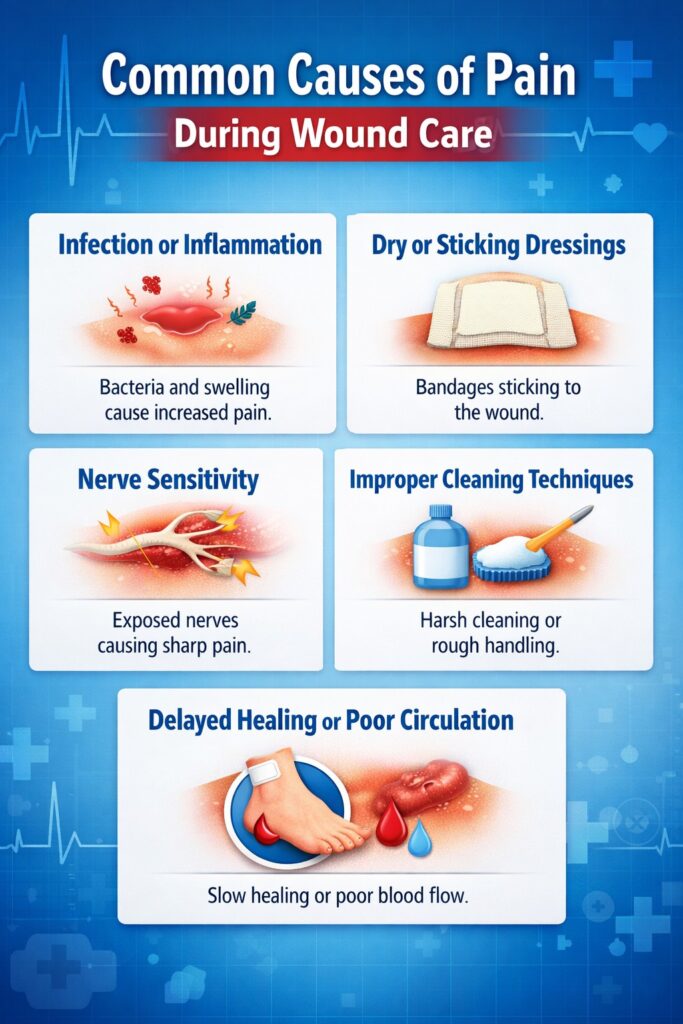
- Dressing changes that stick to the wound
- Infection or inflammation
- Dry or exposed nerve endings
- Pressure on the wound area
- Improper wound cleaning techniques
Tips to Manage Pain During Wound Care
Wound care can be uncomfortable, especially if the injury is healing slowly or requires regular dressing changes. Managing pain effectively during wound care not only improves comfort but also supports faster recovery and reduces stress. With the right techniques and preparation, you can make the process much more manageable and less distressing.
1. Take Pain Medication Before Dressing Changes
One of the most effective ways to reduce discomfort is to take doctor-recommended pain relief for wound care, such as over-the-counter or prescribed medications, 30–60 minutes before cleaning or dressing changes.
2. Use Proper Wound Cleaning Techniques
Gentle cleaning with saline solution helps prevent irritation. Avoid harsh antiseptics unless prescribed, as they can damage healthy tissue and increase pain.
3. Keep the Wound Moist
A moist wound environment helps reduce pain and promotes faster healing. Use recommended ointments or dressings designed to maintain moisture.
4. Choose Advanced or Non-Stick Dressings
Modern dressings such as foam, hydrogel, or silicone dressings reduce friction and minimize discomfort during removal.
5. Use Cold Therapy Carefully
Applying a cold compress around the wound can reduce inflammation and numb the area.
6. Practice Relaxation Techniques
Stress can increase pain perception. Deep breathing, meditation, and relaxation techniques can help reduce discomfort during wound care.
7. Prevent Infection
Infections can significantly increase pain and delay healing. Watch for symptoms such as redness, swelling, warmth, or discharge.
Smart pain management helps your wound heal safely and smoothly.
Managing pain during wound care is essential for comfort and faster recovery. Using proper cleaning techniques, advanced dressings, medications, and infection prevention methods can significantly reduce discomfort. If pain persists or worsens, Hill Drugs Pharmacy may help you. With the right approach, you can ensure safer, faster, and less painful wound healing. Contact us today by calling (949) 640-6564 to ensure your pain is managed during wound care.
FAQs About Managing Pain During Wound Care
How can I reduce pain during wound dressing changes?
You can reduce pain during wound dressing changes by taking pain medication before the procedure and using non-stick dressings. Pain relief medication taken 30–60 minutes before dressing changes helps minimize discomfort, while modern dressings like silicone or foam prevent sticking and reduce irritation during removal.
Why does wound care hurt so much?
Wound care hurts because nerve endings are exposed and the tissue is sensitive during healing. Pain can also increase due to inflammation, infection, dry wounds, or dressings sticking to the wound, making proper wound care techniques essential for pain reduction.
What is the best pain relief method for wounds?
The best pain relief method for wounds includes prescribed medications, proper wound cleaning, and moisture-retaining dressings. These methods reduce inflammation, protect nerve endings, and create an optimal environment for faster and less painful healing.
Does keeping a wound moist reduce pain?
Yes, keeping a wound moist helps reduce pain and promotes faster healing. Moist wound environments protect nerve endings, prevent tissue from drying out, and reduce discomfort during dressing changes.
How do you clean a wound without causing pain?
You can clean a wound without causing pain by using sterile saline solution and gentle cleaning techniques. Avoid harsh antiseptics unless recommended by a doctor, as they can irritate the wound and increase pain.
How long does wound pain usually last?
Wound pain usually lasts a few days to several weeks depending on the severity and type of wound. Minor wounds heal quickly, while surgical wounds or chronic wounds may take longer and require professional pain management.
When should I see a doctor for wound pain?
You should see a doctor if wound pain becomes severe, worsens, or shows signs of infection. Symptoms like redness, swelling, warmth, pus, or fever indicate infection and require immediate medical attention.